Halloween Costs $115 a Person: Cap It in 9 Days
Halloween is nine days away, and the national bill is already written. Consumers are expected to spend a record 13.5 billion dollars on Halloween in 2026, up from 13.1 billion last year, at an average of 115.14 dollars per person, according to the National Retail Federation's annual survey conducted by Prosper Insights & Analytics among 7,889 consumers from September 1 to 9, as summarized in the NRF Halloween spending report coverage and broken down in this analysis of what the $13.5 billion means. Seventy-four percent of consumers plan to celebrate. The average is not a budget, though, and the gap between the households that spend 40 dollars and the ones that spend 300 is almost entirely decided in the next nine days. Here is the checklist I use, in the order that saves the most money first.
The national picture, so you can see your share of it
| Category | Planned spending | Share of shoppers buying |
|---|---|---|
| Costumes | 4.4 billion dollars | 71 percent |
| Decorations | 4.3 billion dollars | 78 percent |
| Candy | 4.1 billion dollars | 96 percent |
| Greeting cards | 0.8 billion dollars | 42 percent |
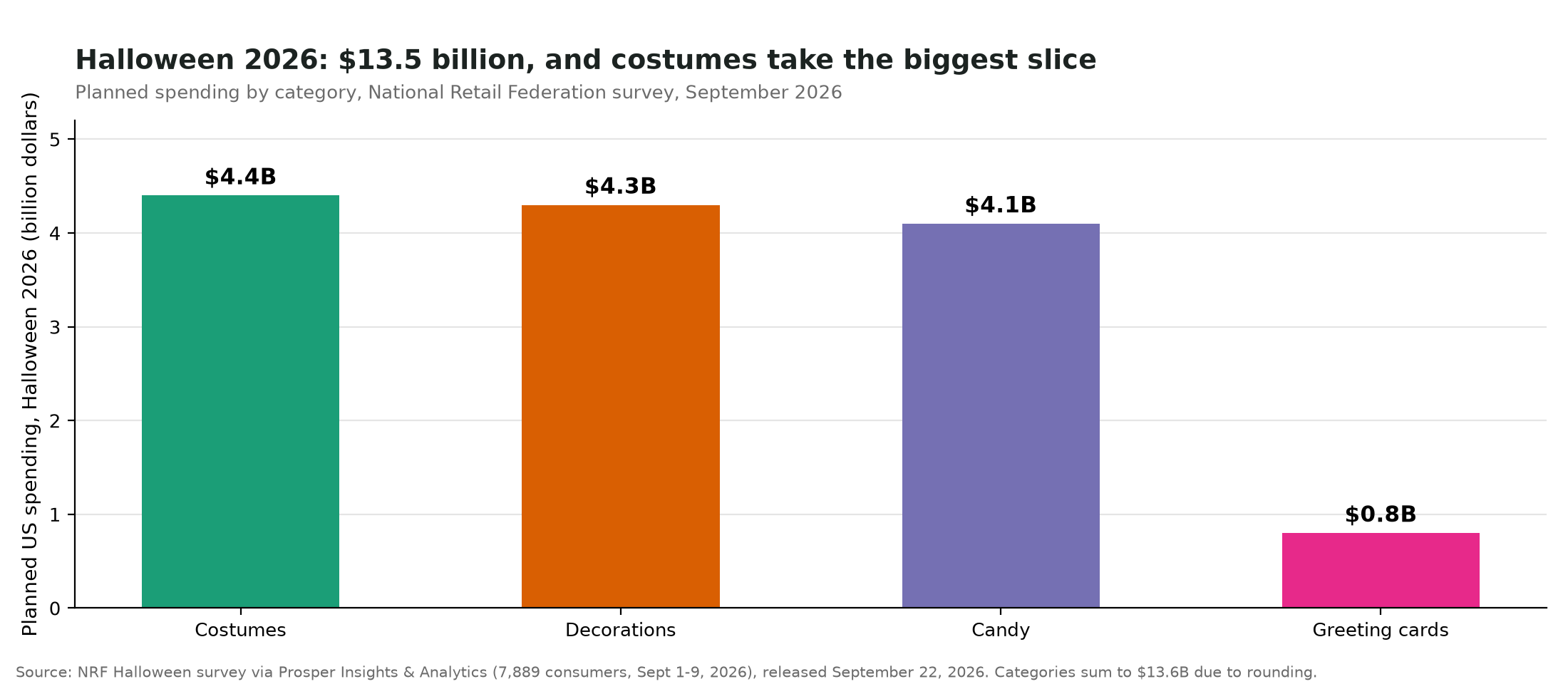 Planned Halloween 2026 spending by category. Costumes, decorations and candy are nearly tied; cards are the small print. Source: NRF survey via Prosper Insights & Analytics, September 2026.
The 9-day cap checklist
Set the cap today, as a number, not a feeling. Write down one figure for the whole holiday. The national per-person average is 115.14 dollars; a deliberate household cap of 75 dollars per celebrating person still funds a full Halloween and frees roughly 40 dollars a head against the average. This is the same move as the October holiday sinking fund, compressed: the fund works because the number exists before the shopping does.
Costumes first, because they are the biggest category and the most reusable. Thirty-four percent of shoppers told the NRF they would look for items they can reuse, and costumes are where reuse pays best. Check what is already in the closet before buying anything; a costume worn twice has half the per-wear cost of the same costume bought new, and a 40-dollar costume worn three years costs about 13 dollars a year.
Comparison-shop the candy, not the decorations. Thirty-one percent of shoppers said they would shop around if prices ran high, and 26 percent would hunt coupons. Candy is a commodity with identical products at five different prices within two miles; decorations are where stores differentiate and discount games get murky. Spend your comparison time where the products are truly identical. Candy is also 96-percent penetration: almost everyone buys it, so almost everyone overpays for it somewhere.
Buy the pumpkin last. Forty-two percent of celebrants plan to carve a pumpkin. Pumpkins bought on October 22 sit outside for nine days; the same pumpkin bought on October 29 is fresher, carves cleaner, and is increasingly likely to be marked down as stores clear perishable stock before the 31st.
Count the cards honestly. Greeting card spending is expected to reach 800 million dollars, with 42 percent of shoppers buying, up from 38 percent last year. Cards are the category nobody remembers buying. If your household sends them, price them into the cap explicitly; if not, a text message with a photo of the costume costs nothing and arrives faster.
Keep the receipt rule for one week. Anything decorative bought in the next nine days that is still in its packaging on November 1 goes back. The NRF found discount stores are the top shopping destination at 39 percent, ahead of specialty Halloween stores at 32 percent and online at 27 percent, which tells you the average shopper is already price-hunting; the return rule is how you keep that discipline after the holiday adrenaline fades.
A worked cap for a household of four
Take the national averages and cut them deliberately. Four people at the 115.14-dollar average is 460.56 dollars. Apply the checklist: costumes reused or capped at 25 dollars each (100 dollars), candy bought on price comparison for a typical street-facing house (45 dollars), one pumpkin bought late (8 dollars), decorations limited to what is already owned plus one 15-dollar addition, and no cards. The total is 168 dollars against a 460-dollar national-average pace, a saving of about 293 dollars, with every visible tradition intact. That freed money is exactly the size of the gap a SNAP-era grocery budget has to close in a tight month, and it is decided entirely before October 31, not after the statements arrive.
Get the newsletter
New articles and the occasional deep dive. No spam.
Unsubscribe anytime. We never sell your email.