Fed Decision Today: What a Hold Costs You
The Federal Reserve announces its decision at 2:00 p.m. Eastern today, and for once the announcement itself is the least interesting part. In the Reuters poll of October 16 to 20, covered in this preview of today's decision, 94 of 100 economists expected the Fed to hold the target range at 3.75 to 4.00 percent today, and all 100 expected another increase in December. A hold that everyone expects, followed by a hike that everyone expects, is not a nonevent for your wallet. It is a schedule. Here is what that schedule costs, worked in dollars, the same way I costed the I Bond November reset decision yesterday.
The numbers going into the meeting
| Fact | Value | Source |
|---|---|---|
| Current target range | 3.75% to 4.00%, set September 16 | Fed statement, via reporting below |
| September vote | 12 to 0 for a quarter-point hike | The Boston Report's meeting preview |
| Inflation | 3.7% for the 12 months to September | BLS, via the same preview |
| Economists expecting a hold today | 94 of 100 | Reuters poll, Oct 16 to 20 |
| Economists expecting a December hike | 100 of 100 | Reuters poll, Oct 16 to 20 |
| Next meeting | December 8 to 9 | Federal Reserve calendar |
The detail behind the table is in The Boston Report's preview of today's meeting, which notes the September increase was the Fed's first since July 2023 and that the October meeting carries no new Summary of Economic Projections, so the statement wording and the 2:30 p.m. press conference are the whole signal. Futures markets agree with the economists: this investor guide to the meeting put the odds of a hold between 83 and 90 percent going into the week.
What one more quarter point actually costs
Most variable credit card APRs are the prime rate plus a fixed margin, and prime moves one-for-one with the federal funds rate, usually within one billing cycle or two of a Fed move. So the December hike the entire Reuters panel expects has a price you can compute today, before it happens:
| Card balance (constant all year) | Added interest from a +0.25 point hike, per year |
|---|---|
| $3,000 | $7.50 |
| $6,000 | $15.00 |
| $10,000 | $25.00 |
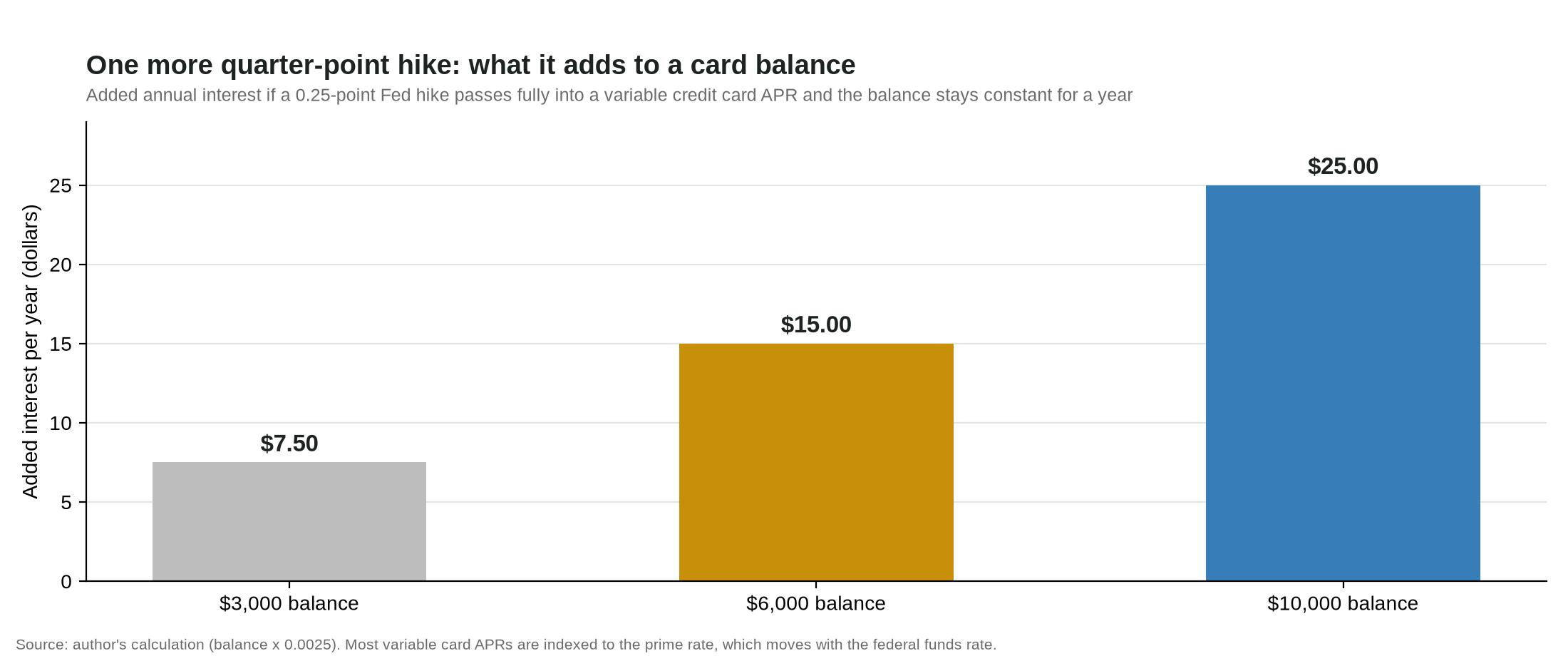
Figure 1: Added annual interest from a 0.25-point increase passed fully into a variable card APR. Source: author's calculation.
Two honest readings of that table. First, the direct cost of one hike is small: $15 a year on a $6,000 balance is not a crisis, and anyone telling you to make a major financial decision over $15 is selling something. Second, the cost is not the point; the direction is. This hiking cycle has already moved the target range to 3.75 to 4.00 percent, and every quarter point you carry a balance through is a quarter point that compounds against you at card APRs above 20 percent. The balance is the expense. The hike just reprices it, the same repricing logic that makes the Saver's Match thresholds worth checking before year-end.
The three moves this schedule actually justifies
Do not chase a savings yield switch this week. High-yield savings rates follow the funds rate with a lag, in both directions. A hold today plus a likely hike in December means top savings yields are more likely to edge up than down into January. If your cash sits in an account paying under 1 percent while top high-yield accounts pay several points more, that gap, not the Fed, is your problem, and it is worth fixing on any week of the year.
Treat December 8 as a deadline for balance decisions, not today. If you are carrying a card balance and weighing a balance-transfer offer or a payoff push, the relevant date is the December meeting, because that is when the expected repricing happens. A transfer offer expiring in November deserves a decision on its own terms; an offer good through mid-December can wait for the actual decision rather than the forecast.
Lock nothing in a panic at 2:05 p.m. Rate-lock and refinancing decisions turn on mortgage rates, which follow longer-term Treasury yields, not the funds rate directly. The 10-year yield has been hovering near 5 percent this month per the meeting previews above, and it will move on the press conference tone, not the hold itself. A hawkish hold can raise mortgage rates on a day the Fed "did nothing," which is the single most misunderstood mechanic in this whole story.
FAQ
What time is the Fed decision today? The statement is released at 2:00 p.m. Eastern on Wednesday, October 28, 2026, with Chair Warsh's press conference at 2:30 p.m. The meeting itself runs October 27 to 28.
Will a hold today lower my credit card APR? No. A hold leaves the rate your APR is indexed to unchanged. Only a cut lowers it, and no cut is in the Reuters panel's expectations for today or December; all 100 economists polled expect the next move to be a hike.
When would a December hike reach my card statement? Most issuers reprice a variable APR within one to two billing cycles of a prime rate change, so a December 9 hike would typically show up on a January or February statement. Your cardholder agreement states the exact timing for your card.
Get the newsletter
New articles and the occasional deep dive. No spam.
Unsubscribe anytime. We never sell your email.