Winter Heating Will Cost $640 to $2,115
The most useful money document of October is not a rate sheet. It is the Energy Information Administration's Winter Fuels Outlook, released October 6, because it tells you, by heating fuel, roughly what November through March will cost before the first cold bill lands. I turned its season totals into monthly budget numbers, and the spread is wider than most households expect.
The forecast, in plain numbers
For the November to March season, the EIA projects average spending of 640 dollars for homes heating mainly with natural gas, down 9 percent from last winter; 1,196 dollars for electric heat, up 4 percent; 1,246 dollars for propane, down 3 percent; and 2,115 dollars for heating oil, up 21 percent. Heating oil is only about 3 percent of U.S. homes, concentrated in the Northeast, but for those households this is a serious jump. The agency's outlook assumes an average heating oil price of 5.26 dollars a gallon, up 34 percent, partly offset by about 9 percent lower consumption in a milder Northeast forecast, to roughly 402 gallons for the season, according to summaries of the outlook.
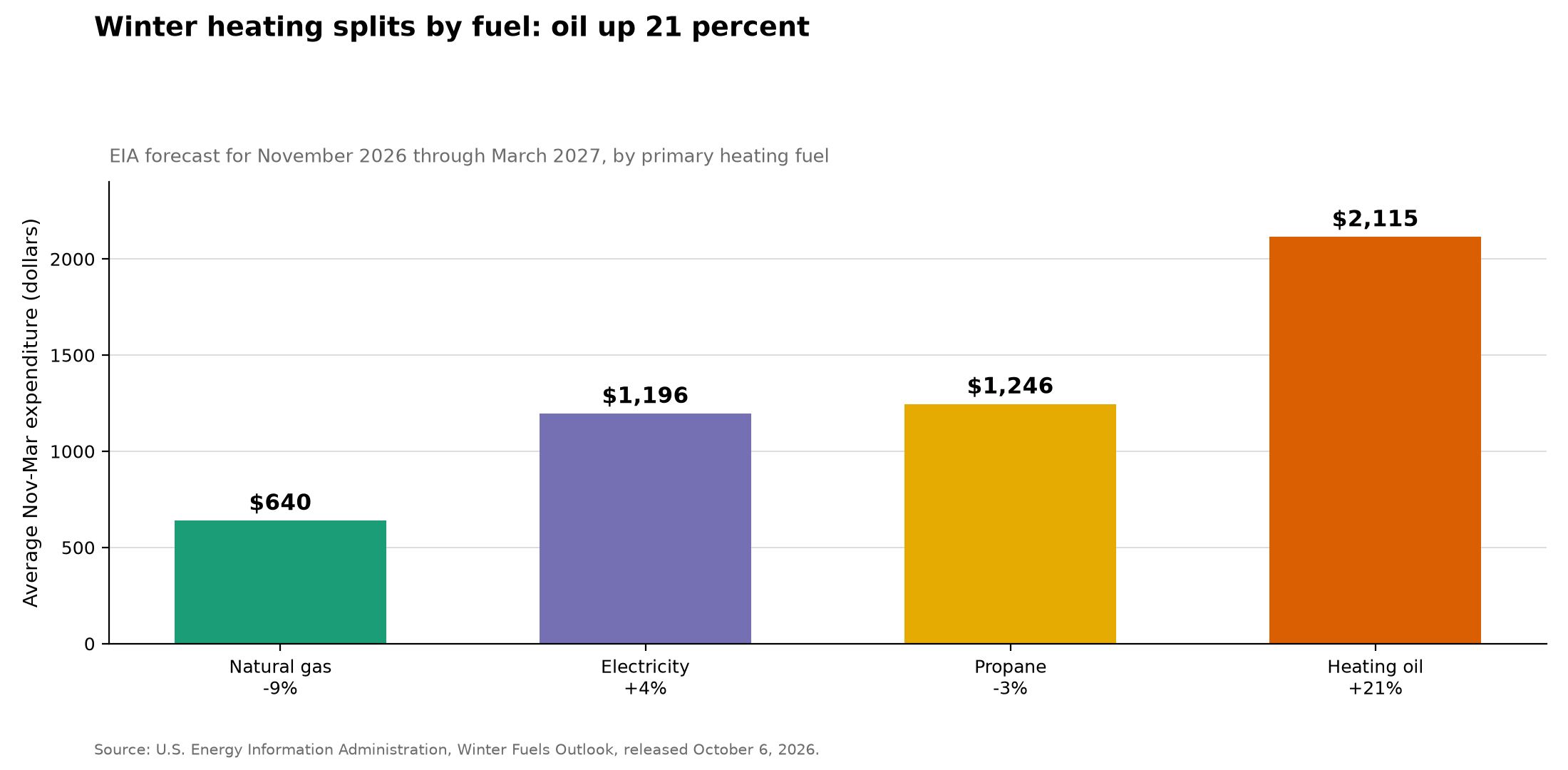
Figure 1: Average winter heating expenditure by primary fuel. Source: U.S. Energy Information Administration, Winter Fuels Outlook, October 6, 2026.
Turn the season total into a monthly line
A season total is easy to ignore; a monthly transfer is not. Divide by five months. Gas households should budget about 128 dollars a month for heating on top of normal non-heating use; electric households about 239 dollars; propane about 249 dollars; oil households about 423 dollars. If you start that transfer in October, you get a one-month head start, which is the cheapest cushion there is. My rule from my own bills: budget the EIA average for your fuel, then add 10 percent if your home is older, drafty, or north-facing. A colder-than-forecast winter is the main way this outlook misses, and the agency itself flags temperature uncertainty, including El Nino effects, in its release.
If the number does not fit, apply early for help
The Low Income Home Energy Assistance Program, LIHEAP, is the main federal help, and its windows are already open in many states. As one example of the pattern, Illinois opened applications on October 1 for priority groups including adults 60 and older, people with a disability, families with a child age 5 or younger, and households facing disconnection, with all other eligible households able to apply from November 1, and income limits in that state reaching up to two times the federal poverty level, with a 30-day gross limit of 8,250 dollars for a household of four in the state table. Wyoming and New Jersey summaries show October 1 starts as well, with their own state median income tests. The details differ by state, which is exactly why you check your state's energy office now rather than in January when funds are thinner and the furnace is already struggling.
Three cheap moves before November
First, ask your utility about levelized or budget billing; it does not lower your cost, but it kills the January spike that drives credit card use. Second, if you burn oil or propane, price a fill now and ask about pre-buy or cap programs in writing, because the EIA's oil-price assumption is the expensive part of this forecast. Third, do the unglamorous sealing: door sweeps, window film on the worst windows, and a thermostat schedule you will actually keep. None of that changes your fuel's price. All of it changes how many gallons or kilowatt-hours that price gets multiplied by.
FAQ
What will winter heating cost this year? The EIA projects November to March averages of 640 dollars for natural gas, 1,196 for electricity, 1,246 for propane, and 2,115 for heating oil, per its October 6, 2026 outlook.
Why is heating oil up so much? The outlook assumes oil at 5.26 dollars a gallon, up 34 percent, with tight distillate markets; lower expected consumption only partly offsets the price rise.
How much should I budget each month? Roughly the season total divided by five: about 128 dollars for gas, 239 for electric, 249 for propane, and 423 for oil, plus a buffer if your home is inefficient.
When does LIHEAP open? Many states opened October 1, often for priority households first, with general applications following, for example November 1 in Illinois. Check your state energy office for its exact window and income test.
Does budget billing save money? No, it spreads the same cost evenly across months. The savings come from sealing, scheduling, and, for oil and propane, shopping fills and price programs early.
Get the newsletter
New articles and the occasional deep dive. No spam.
Unsubscribe anytime. We never sell your email.