FSA Spend-Down Math: What You Lose on Dec 31
There are two months left in the plan year, and the most expensive question in your benefits portal is a small one: what happens to the health FSA balance you have not spent by December 31? The answer is not one rule but three, and which one your employer picked decides whether a $1,200 leftover costs you $1,200, $520, or nothing yet. I worked the math for four balances so you can find yours.
The three possible rules
Under the basic use-it-or-lose-it rule, any money left in a health FSA when the plan year ends is forfeited. The IRS lets employers soften that with exactly one of two options, never both, as the FSA deadline rules summary lays out from the IRS notices: a grace period of up to 2.5 months, which for a calendar-year plan runs to March 15, 2027, or a carryover of up to $680 out of 2026, set by Revenue Procedure 2025-32. The 2026 health FSA contribution limit itself is $3,400.
The distinction that matters: a grace period protects your whole balance but only for 2.5 extra months, and only for new expenses you incur in that window. A carryover protects only the first $680, but that money rolls into 2027 and does not count against next year's $3,400 limit, so a full carryover plus a maximum election gives you $4,080 to spend in 2027. A plan can also offer neither, which makes December 31 a hard wall, the point the forfeited-balance explainer stresses.
Worked examples: four balances, three rules
| Leftover on Dec 31 | No protection: lost | $680 carryover: lost | Grace period: lost if unspent by Mar 15 |
|---|---|---|---|
| $400 | $400 | $0 ($400 rolls over) | $400 |
| $850 | $850 | $170 | $850 |
| $1,200 | $1,200 | $520 | $1,200 |
| $2,000 | $2,000 | $1,320 | $2,000 |
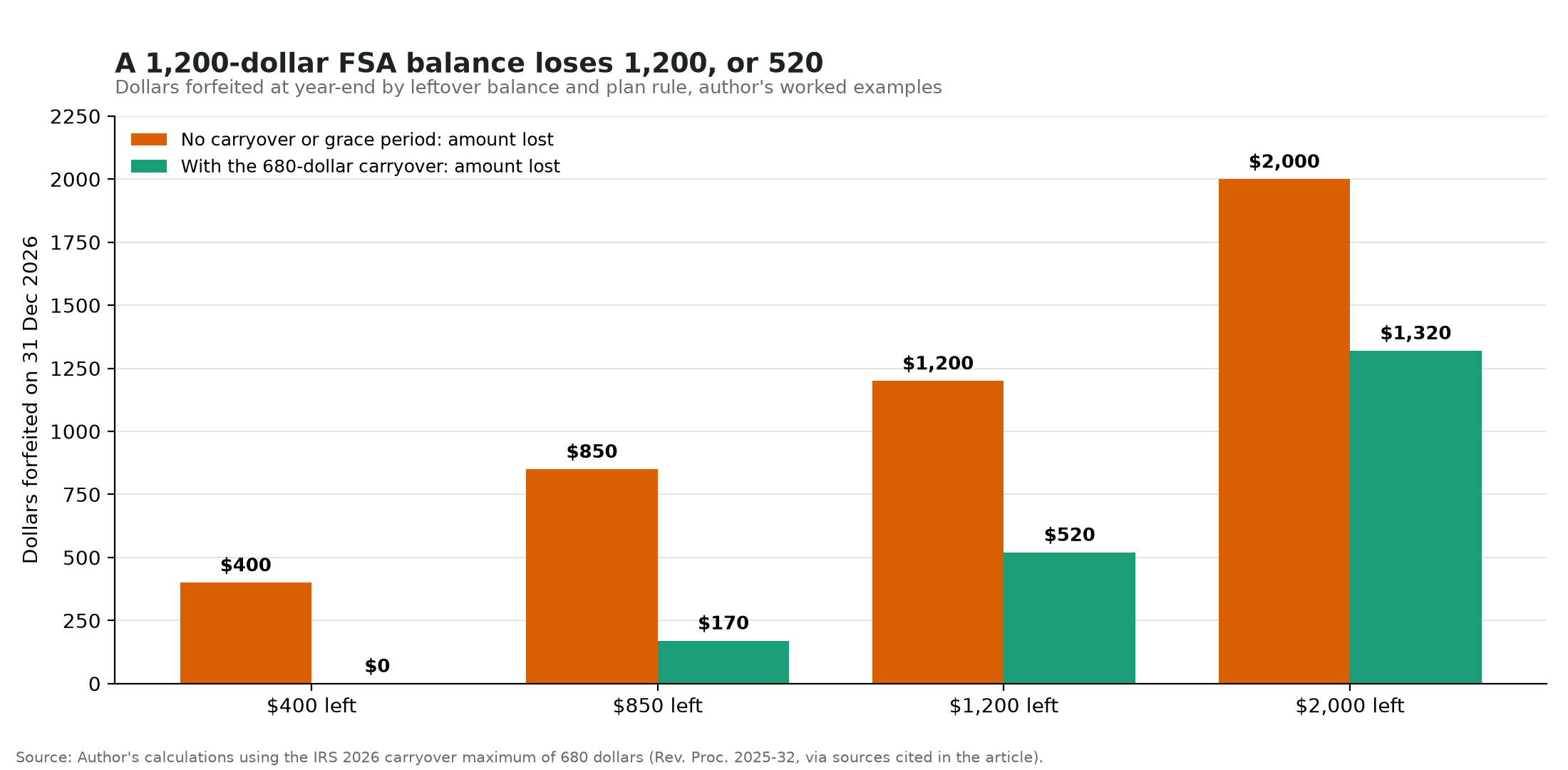
Figure 1: Dollars forfeited by leftover balance and plan rule. Source: author's calculations using the IRS 2026 carryover maximum of $680.
Read your row carefully. At $400, the carryover makes you whole and the other two rules do not. At $1,200, the carryover saves you $680 of the loss, and the grace period saves you only if you can genuinely incur $1,200 of eligible care by March 15, which for most people means a dental crown or new glasses they actually need, scheduled early, not a December panic buy. Buying $520 of supplies you will never use to save $520 of forfeiture is not a saving; it is the same loss with more clutter.
What to do this week
First, find your rule. It is one line in your plan document or one question to HR: carryover, grace period, or neither, and if carryover, whether your employer's cap is the full $680 or lower, since employers may set less. Second, get your real balance and your year-to-date spending from the administrator, not a guess. Third, if you are above your protected amount, pull forward care you already planned: the eye exam, the refill, the dental work, booked in November while schedules are open, not in the last week of December.
While you are in the portal, set next year's election from this year's actual spending, the same discipline I applied in the FSA versus HSA open enrollment math. If you forfeited two years running, elect less; the tax saving on money you lose is zero. Two related deadlines sit nearby: the dependent care FSA discussed in the $7,500 dependent care change has no carryover at all, only a possible grace period, and any 2026 balance strategy pairs with the year-end moves in the Roth conversion bracket check.
FAQ
Can my plan have both a carryover and a grace period? No. IRS rules let a health FSA offer one or the other, not both, and some plans offer neither.
Does a carryover reduce what I can contribute in 2027? No. Carried-over money sits on top of the new year's limit, so $680 carried over plus a $3,400 election is $4,080 available.
Do dependent care FSAs get the $680 carryover? No. The carryover applies only to health FSAs. A dependent care FSA may have a grace period if the employer offers one, and otherwise the balance is forfeited.
What if I leave my job mid-year? That is governed by your plan and COBRA rules, not the year-end rules above. Ask HR before your last day, because the spending window can close with your employment.
Get the newsletter
New articles and the occasional deep dive. No spam.
Unsubscribe anytime. We never sell your email.